Coronal hole faces Earth
Wednesday, 26 August 2020 11:47 UTC
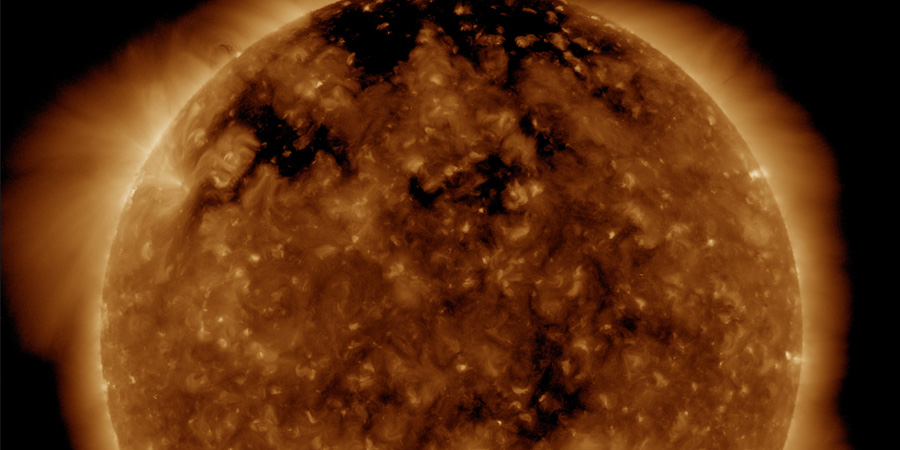
A coronal hole is facing our planet today. While this coronal hole is poorly defined in the sense that there is not one large opening, we do see several openings (dark areas) which combined cover a significant portion of the Sun's northern hemisphere. We even see an opening near the equator that has already passed the central meridian.
A northern hemisphere coronal hole is facing Earth. Enhanced solar wind could arrive in ~3 days - Follow live on https://t.co/bsXLidnzGh pic.twitter.com/myoXaCxAuo
— SpaceWeatherLive (@_SpaceWeather_) August 26, 2020
We think it is likely that Earth will be under the influence of a fast solar wind regime for a couple of days starting late on Friday (28 August) or early on Saturday (29 August). Highest chance of enhanced geomagnetic conditions would be on Saturday where active geomagnetic conditions (Kp4) are likely to be reached. Looking towards the east limb we see another opening south of the northern hemisphere polar coronal hole which should face Earth in about two days from now. If this coronal opening is on a low enough latitude, we could see multiple days with higher than average solar wind speeds. Could be an interesting few days for high latitude sky watchers!
Thank you for reading this article! Did you have any trouble with the technical terms used in this article? Our help section is the place to be where you can find in-depth articles, a FAQ and a list with common abbreviations. Still puzzled? Just post on our forum where we will help you the best we can!
Latest news

CME impact! S4 solar radiation storm

X1.9 solar flare with earth-directed CME

Happy New Year! Celebrate with an M7.1 solar flare!
Latest forum messages
Support SpaceWeatherLive.com!
A lot of people come to SpaceWeatherLive to follow the Solar activity or if there is a chance to see the aurora, but with more traffic comes higher costs to keep the servers online. If you like SpaceWeatherLive and want to support the project you can choose a subscription for an ad-free site or consider a donation. With your help we can keep SpaceWeatherLive online!


Space weather facts
| Last X-flare | 2026/01/18 | X1.9 |
| Last M-flare | 2026/01/21 | M3.4 |
| Last geomagnetic storm | 2026/01/20 | Kp8 (G4) |
| Spotless days | |
|---|---|
| Last spotless day | 2022/06/08 |
| Monthly mean Sunspot Number | |
|---|---|
| December 2025 | 124 +32.2 |
| January 2026 | 107.3 -16.8 |
| Last 30 days | 111.9 +4 |